Terroir in Olive Oil: Same Tree, Different Results
Terroir in Olive Oil: Same Tree, Different Results
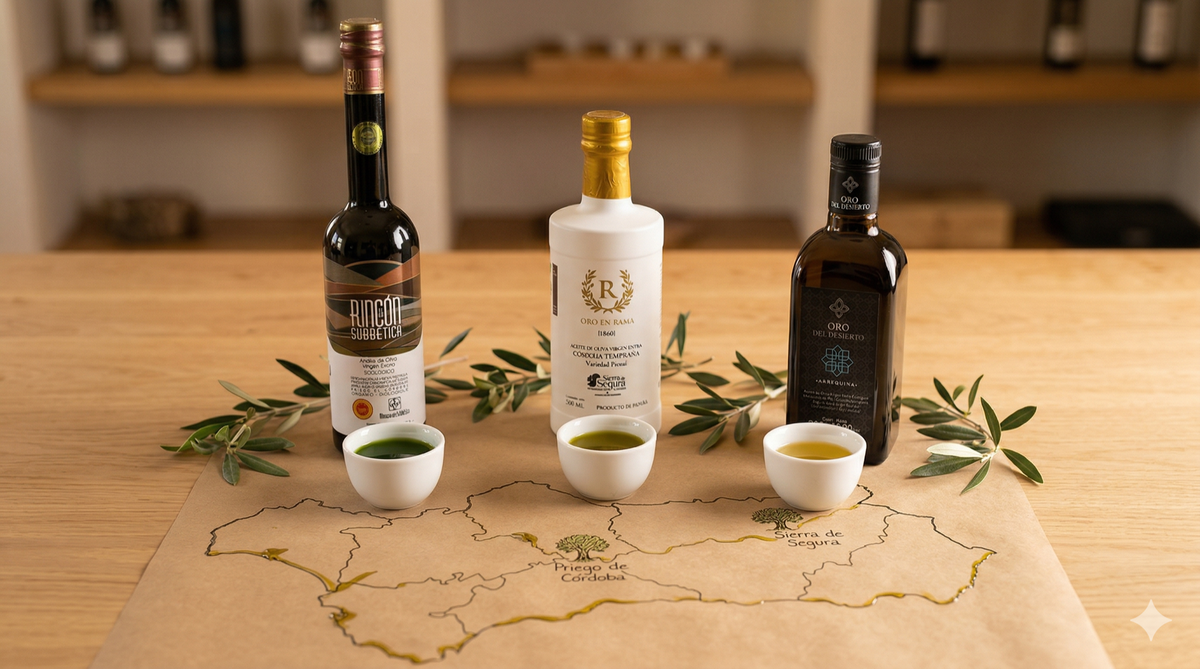
In wine, the concept of terroir is a cornerstone: the same Tempranillo planted in Rioja, Ribera del Duero and La Mancha produces three very different wines. The soil, the climate, the altitude and the aspect shape the character of the grape.
In olive oil, exactly the same thing happens. But almost nobody talks about it.
What is terroir
Terroir is a French word that encompasses all the environmental factors that influence a crop:
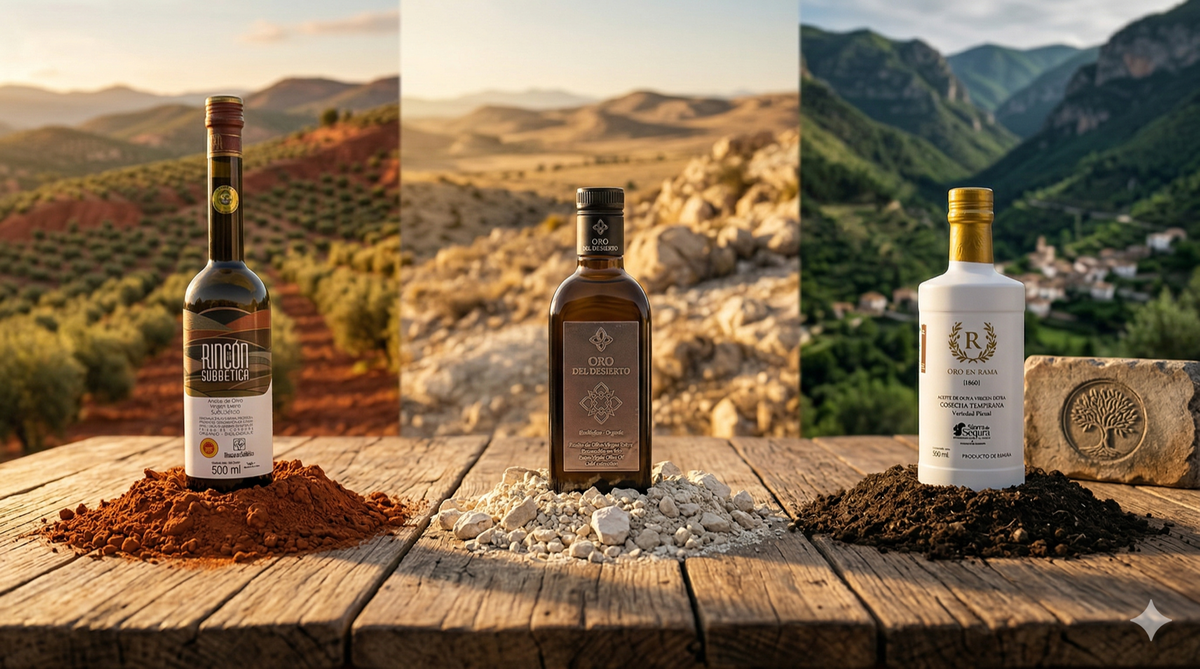
- Soil — composition, depth, drainage, pH
- Climate — average temperature, rainfall, hours of sunshine
- Temperature swing — the difference between the daily maximum and minimum temperature, a decisive factor in the character of the oil
- Altitude — metres above sea level
- Aspect — north, south, hillside, valley
- Microclimate — local conditions (wind, humidity, proximity to the sea or mountains)
These factors act on the plant throughout its life. They cannot be replicated or transplanted. A terroir is unique.
It is worth distinguishing two ways of understanding terroir. The gastronomic perspective — inherited from wine — speaks of character, identity, expression of place. The technical and chemical perspective measures how temperature, soil and altitude alter the composition of fatty acids, polyphenols and volatile compounds in the oil. The two are complementary: the first tells you the story, the second explains why that story tastes the way it does.
How terroir affects olive oil
Let us take the same variety — Picual, for example — and plant it in three different locations:
Picual on the plains (Jaén, 400 m)
Fertile soil, stable heat, little temperature variation between day and night. The olive grows quickly, fattens well, yields plenty of oil. The result is a powerful Picual, with marked bitterness and pungency, but relatively linear in aroma. This is the “classic” profile we associate with Jaén.
Picual in the mountains (Sierra Nevada, 1,200 m)
Poor soil, cold nights even in summer, a temperature swing of 15–20 °C between day and night. The olive grows more slowly, accumulates more polyphenols as a defence, and its aromatic profile becomes more complex. Less volume, more nuance.
Picual on the coast (Granada/Málaga, 200 m)
Maritime influence, humidity, mild temperatures year-round. The olive does not endure extremes. The result is a softer, less assertive Picual, with different notes from inland oils.
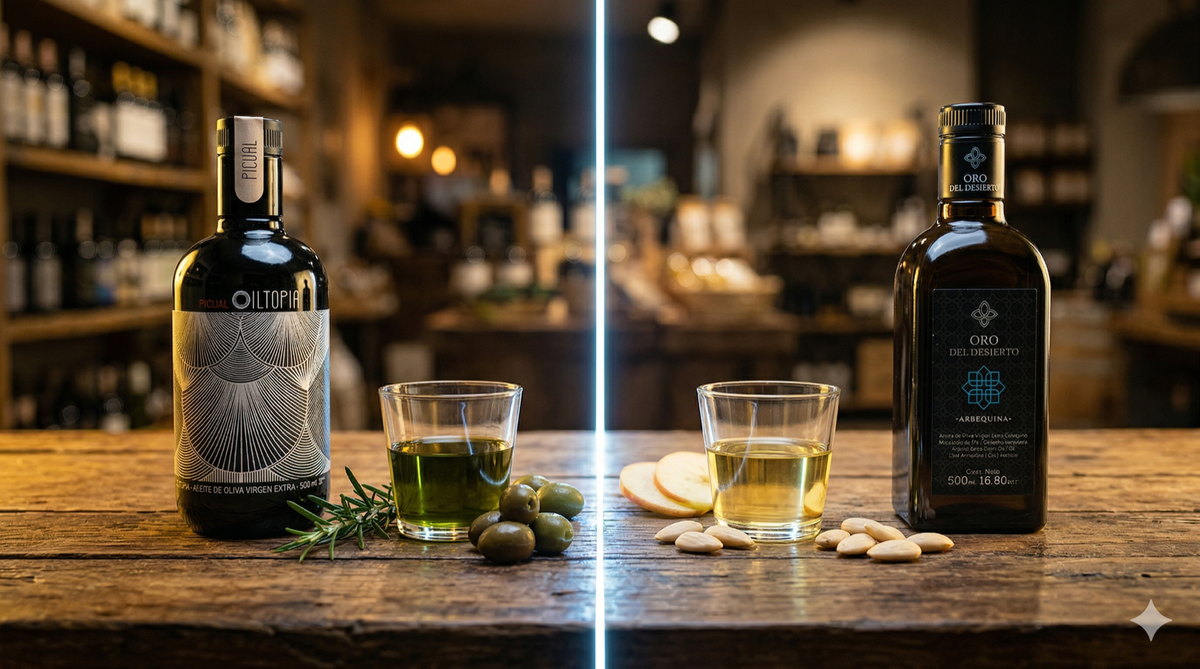
Three Picuales. Three recognisably different oils. The genetics are the same. What changes is the terroir.
Altitude as a multiplier
Of all terroir factors, altitude has the greatest impact on olive oil, and the main mechanism is the temperature swing — the difference between the daytime high and the night-time low:
- Greater temperature swing = slower, more gradual ripening = more aromatic compounds and greater complexity
- Colder nights = the olive tree accumulates more polyphenols as a defence mechanism
- More UV radiation = reinforces polyphenol production
- Later harvest calendar = the olive takes longer to reach véraison, allowing more time to accumulate compounds of interest
High-altitude almazaras (above 800–1,000 metres) are producing some of the most interesting oils in Spain. And it is no coincidence: the mountain demands excellence.
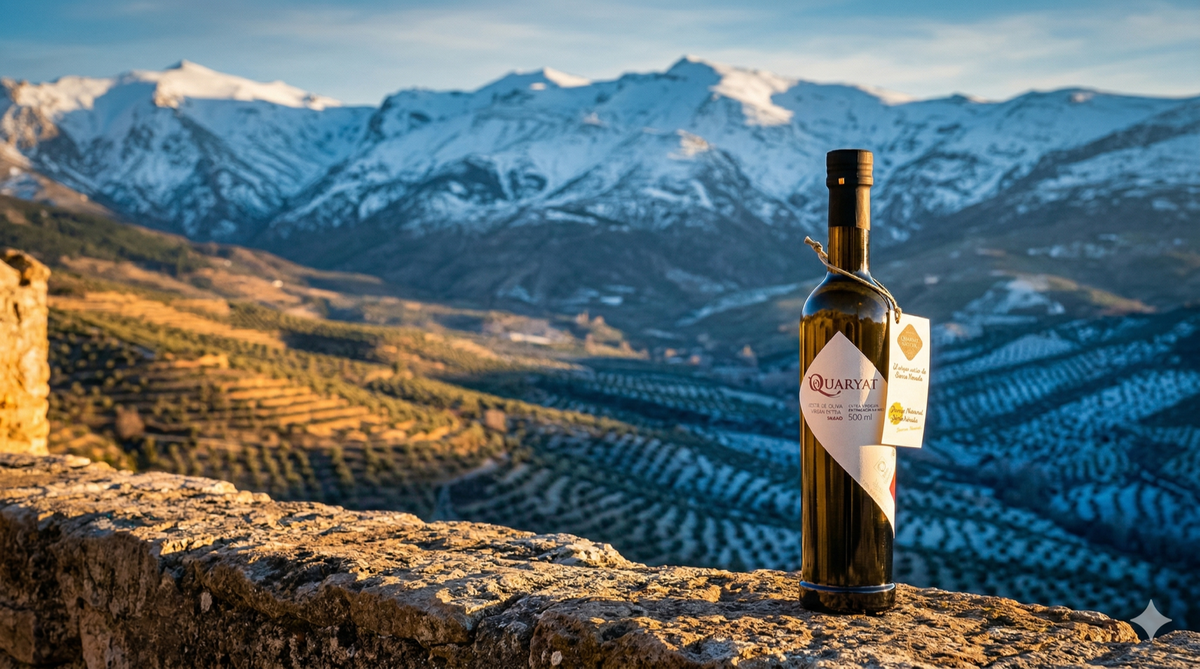
Quaryat Dillar, in Dílar (Sierra Nevada), cultivates Arbequina, Picual, Hojiblanca and Picudo between 1,000 and 1,300 metres. Each of these varieties expresses itself differently from how it would 800 metres lower. The Arbequina, for example, gains an aromatic complexity that is unusual for the variety: more layers, more depth, more personality.
Terroir cannot be bought
This is the key point. A producer can buy the best machinery, hire the finest mill master, invest in state-of-the-art tanks. But they cannot buy terroir. They cannot replicate the 1,300 metres altitude of Dílar, nor the 20 °C temperature swing, nor the soil of Sierra Nevada.
Terroir is the competitive advantage that cannot be copied. It is what makes an oil irreplicable.
Why it matters to you
When you choose an oil by variety and by origin, you are choosing a terroir. And within the same variety, two different origins will give you two different experiences.
Next time you taste an EVOO, do not stop at “it is Picual” or “it is Arbequina”. Ask where it comes from. At what altitude. What type of soil. Because that is the true story of what is on your plate.
Olive oil is not a commodity. It is a product of origin, with as much territorial identity as wine. It is just that the industry would rather you did not know, because if all oils are the same, you compete on price. And if each oil is unique, you compete on value.
Remember: same tree, different result. That is terroir.