Hojiblanca, Picudo and Picual: Three Andalusian Varieties You Should Know
Hojiblanca, Picudo and Picual: Three Andalusian Varieties You Should Know
Spain has more than 260 catalogued olive varieties. In Andalucía alone there are more than 20 indigenous varieties grown commercially. But three dominate the Andalusian olive-oil landscape and are the ones you will find in the vast majority of quality oils from the region.
Let us get to know them.
Picual: the queen of the olive grove
It is the most widely cultivated variety in the world. More than 900,000 hectares in Spain, concentrated in Jaén but present throughout Andalucía.
Origin: Jaén, although today it is cultivated from Granada to Extremadura.
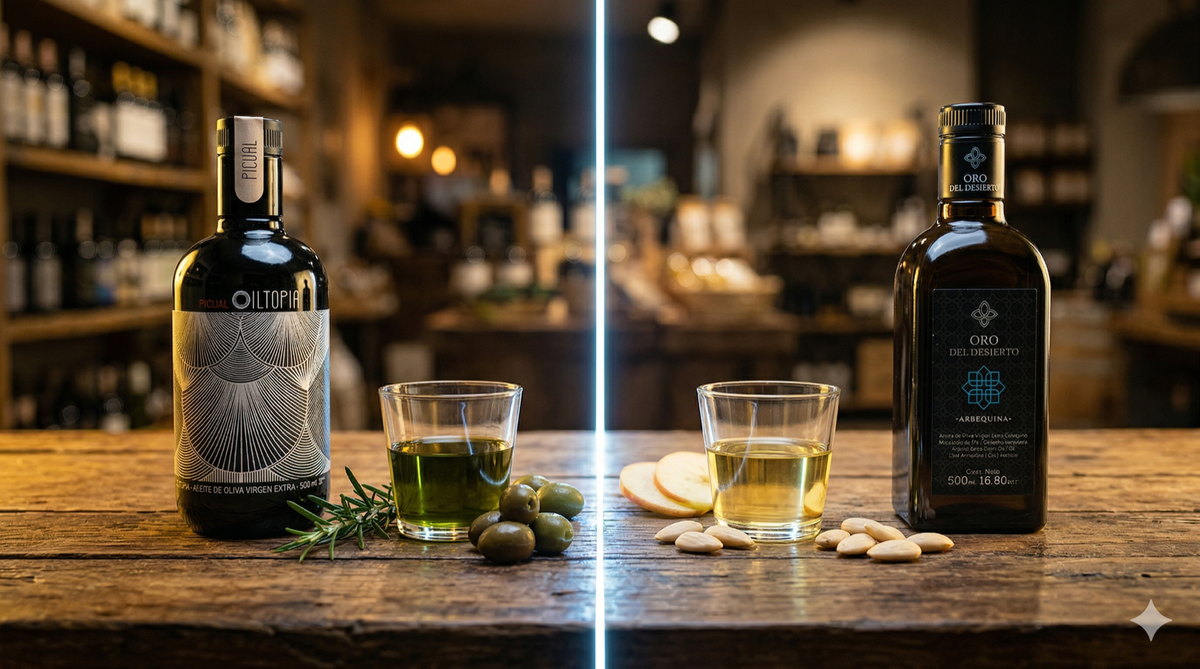
Aromatic profile: Tomato plant, green grass, fig tree, green almond, artichoke. Sometimes green banana, sometimes pepper.
On the palate: A sweet entry that gives way to defined bitterness and progressive pungency. It leaves the mouth clean and fresh.
Technical data:
- Oleic acid: 75–82% (the highest of all commercial varieties)
- Polyphenols: 300–600 mg/kg in early harvest
- Stability: exceptional, the longest of any variety
Ideal for: Red meat, pulses, mature cheeses, grilled vegetables, bread with tomato. Anything with strong character.
Why it matters: It is the most complete variety from both a nutritional and preservation standpoint. Its high oleic acid and polyphenol content make it the benchmark of premium olive oil.
Hojiblanca: the all-rounder
The second Andalusian variety by acreage. It dominates in Córdoba, Málaga and parts of Sevilla and Granada. Its name comes from its leaves, which have a white underside that shines in the sun.
Origin: Lucena (Córdoba), spread across the Subbaetic region.
Aromatic profile: Fresh grass, almond, ripe banana, apple. More fruity and less “green” than Picual.
On the palate: A sweet, almond entry. Gentle, balanced bitterness and pungency. Fluid texture, an enveloping sensation. It is the “easiest” of the three.
Technical data:
- Oleic acid: 67–78%
- Polyphenols: 200–400 mg/kg in early harvest
- Stability: good, lower than Picual but higher than Arbequina
Ideal for: Fish, salads, pasta, rice, steamed vegetables. It also excels as a table olive: Hojiblanca is the dual-purpose variety par excellence, prized for both its oil and its fruit. Green, dressed with traditional Andalusian seasonings blending salt, thyme, garlic, orange, spearmint or fennel depending on the area, it is a benchmark. Oxidised and turned black, it is the undisputed star: the “pearls of the Guadalquivir”.
Why it matters: It is the bridge variety. It has enough character not to be boring and enough gentleness not to intimidate. In a blend, it adds sweetness and roundness.
Picudo: the expressive one
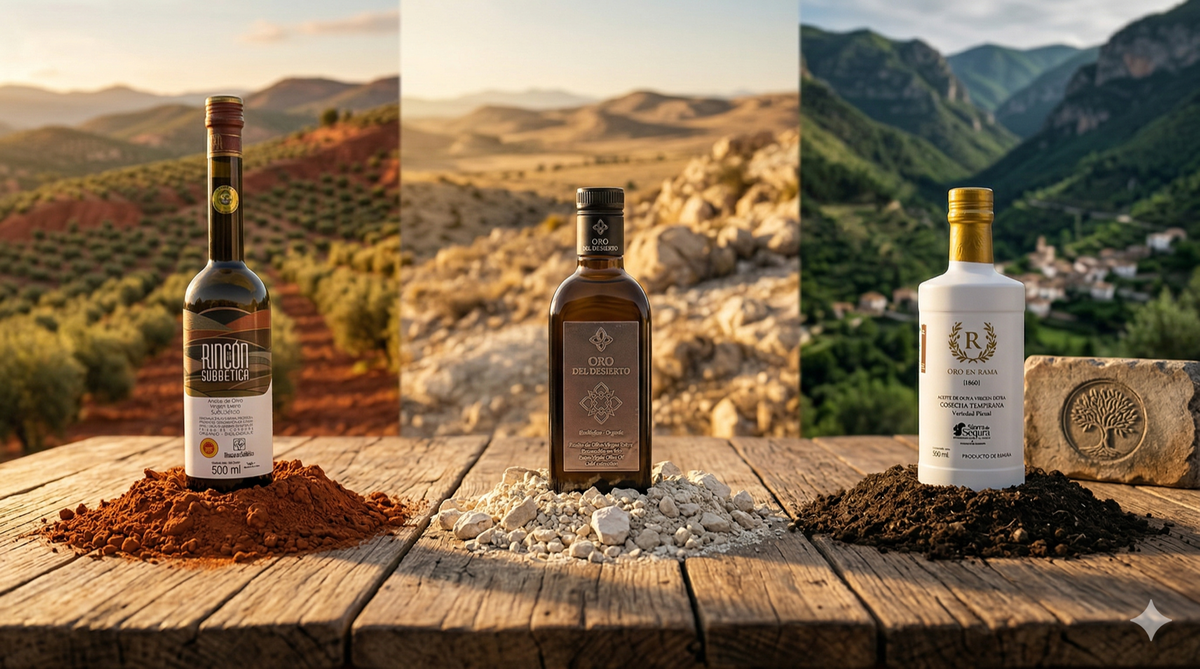
Less well known outside Andalucía, but increasingly valued by experts. It is grown mainly in southern Córdoba (Priego, Baena) and parts of Granada and Jaén.
Origin: The districts of Priego de Córdoba and Baena, heart of the Subbaetic region.
Aromatic profile: Ripe fruit (apple, banana), flowers, fresh grass. It is the most expressive and aromatic of the three. On the nose, it surprises.
On the palate: Very sweet at first, with very gentle bitterness and almost imperceptible pungency. Fluid, light texture.
Technical data:
- Oleic acid: 61–72%
- Polyphenols: 150–300 mg/kg
- Stability: medium-low (oxidises sooner than Picual and Hojiblanca)
Ideal for: White fish, seafood, fruit salads, carpaccios, gazpacho, pastry. Anything that calls for aroma without intensity.
Why it matters: Picudo offers something that neither Picual nor Hojiblanca can: aromatic expressiveness. In a blend, it is the variety that “lights up” the whole.
The three together: the Andalusian blend
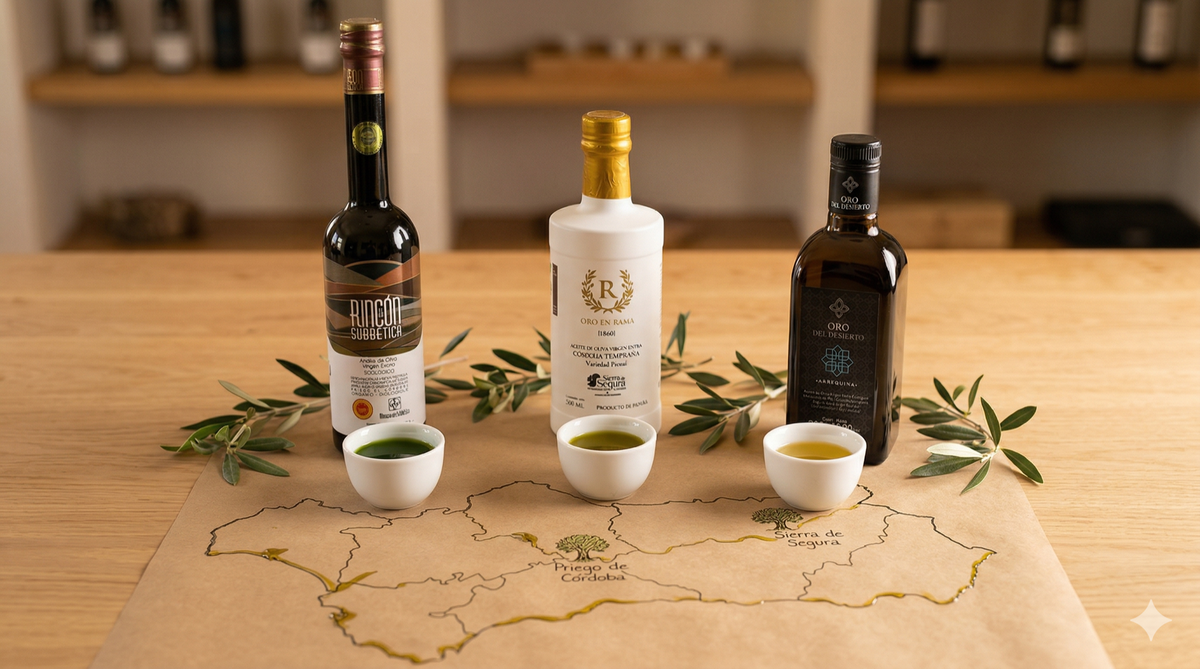
When a mill master blends Picual, Hojiblanca and Picudo, they are building an oil on three pillars:
| Variety | Role in the blend |
|---|---|
| Picual | Structure, stability, bitterness, polyphenols |
| Hojiblanca | Sweetness, smoothness, roundness, accessibility |
| Picudo | Aroma, fruitiness, florals, complexity on the nose |
The result is an oil you could not achieve with any single variety: it has the stability of Picual, the accessibility of Hojiblanca and the nose of Picudo.
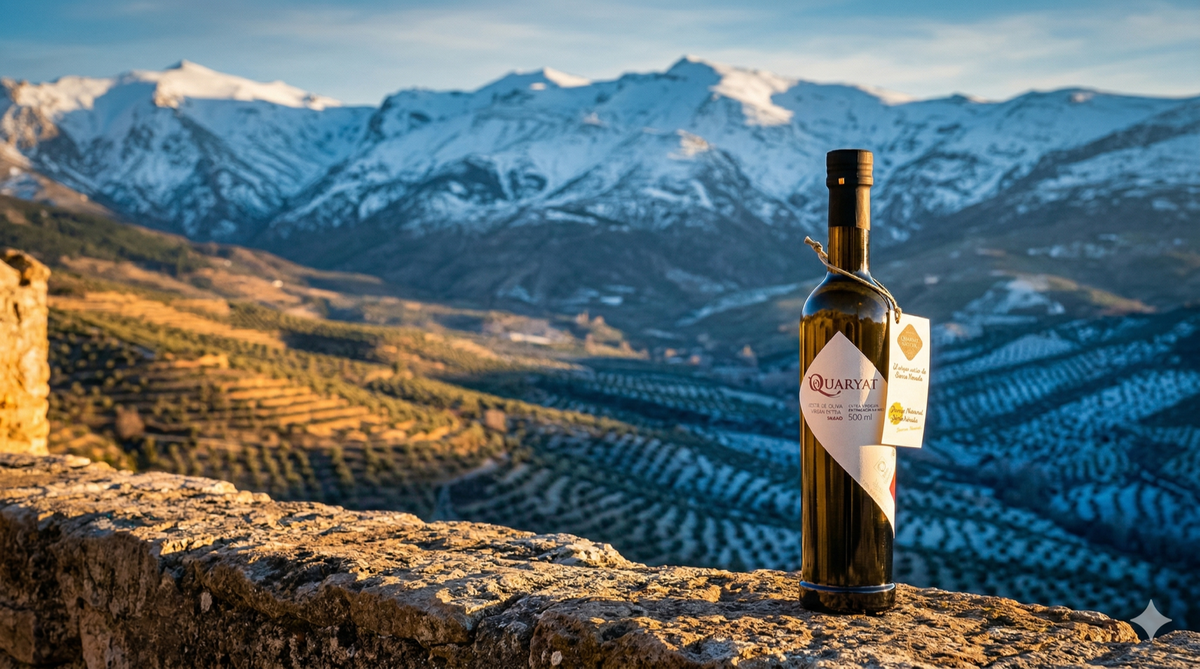
At Quaryat Dillar (Dílar, Sierra Nevada), they cultivate all three on the same estate at over 1,000 metres altitude. Their Blend combines them in a coupage (blend) that also carries the mountain terroir factor: each variety expresses itself differently from how it would 800 metres lower.
Beyond the big three
Andalucía has many more varieties that deserve attention: Lechín (Granada, Sevilla), Verdial (Málaga, Huelva), Manzanilla de Jaén… Every district has its own indigenous olive trees, adapted over centuries to the local terrain and climate.
A fact that illustrates the reach of Picual: in some areas it is known as Marteña, Lopereña or Nevadillo blanco. These are not different varieties but the same Picual under a local name. The fact that a single variety has so many synonyms speaks to how far it has spread across olive-growing country and taken root in each territory’s identity.
But if you want to understand Andalusian olive oil, start with Picual, Hojiblanca and Picudo. With those three you have the basic vocabulary to talk about olive oil with authority.