Picual Olive Oil: The Most Complete Variety in the World of Olive Oil
Picual Olive Oil: The Most Complete Variety in the World of Olive Oil
Picual is the most widely cultivated olive variety in the world. In Jaén alone it covers over 550,000 hectares; nationally it exceeds 900,000, spread across Jaén, Córdoba, Granada and other provinces, and today it is expanding across the globe. Yet it is the variety that divides opinion the most. Some people adore it, others avoid it. There is almost never a middle ground.
Why? Because a good Picual is bitter and peppery. And for anyone accustomed to neutral oils, that can be disconcerting.
Let us bust some myths.
"Picual is bitter — that means it has gone bad"
False. Bitterness and pungency in an extra virgin olive oil are positive attributes. The official tasting panel says so, laboratory analyses say so, and common sense says so: those sensations come from polyphenols, the compounds that protect the oil from oxidation and your body from oxidative stress.
A Picual with no bitterness or pungency is a Picual that has lost the best of itself. Probably harvested late, processed without urgency, or stored for too long.
What to Expect from a Good Picual
On the nose: tomato leaf, fig tree, artichoke, green almond, freshly cut grass. Sometimes green banana, sometimes pepper. It depends on the terroir and when it was harvested.
On the palate: it enters sweet (yes, sweet), then unfolds its bitterness and pungency. The peppery kick of Picual is usually felt at the end, in the throat. It is progressive, not aggressive. A good Picual leaves your mouth clean and fresh.
Why It Is the Most Complete Variety
Three reasons:
1. Stability. Picual has the highest oleic acid content of all commercial varieties — between 75% and 82%. This gives it exceptional stability against oxidation and heat. It lasts longer in the pantry and holds up better during cooking.
2. Polyphenols. An early-harvest Picual can exceed 500 mg/kg of total polyphenols. For context: the EFSA (European Food Safety Authority) recognises health benefits starting at 250 mg/kg. It is the variety with the greatest potential in this regard.
3. Personality. This is not a variety that goes unnoticed. It has character, presence, and opinion. That makes it perfect for flavourful dishes — meats, pulses, cheeses, grilled vegetables — and sets it apart from milder varieties like Arbequina.
Picual Beyond Jaén
Although Jaén is the epicentre of Picual, some of the most interesting expressions of this variety are being made outside the Jaén countryside.
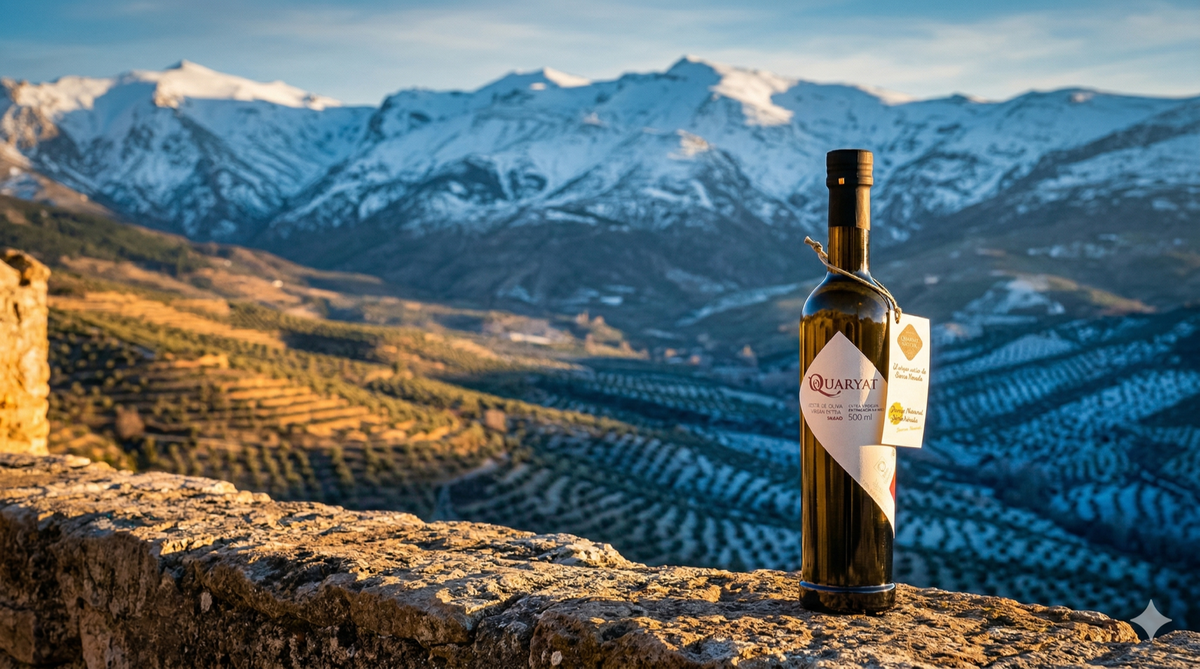
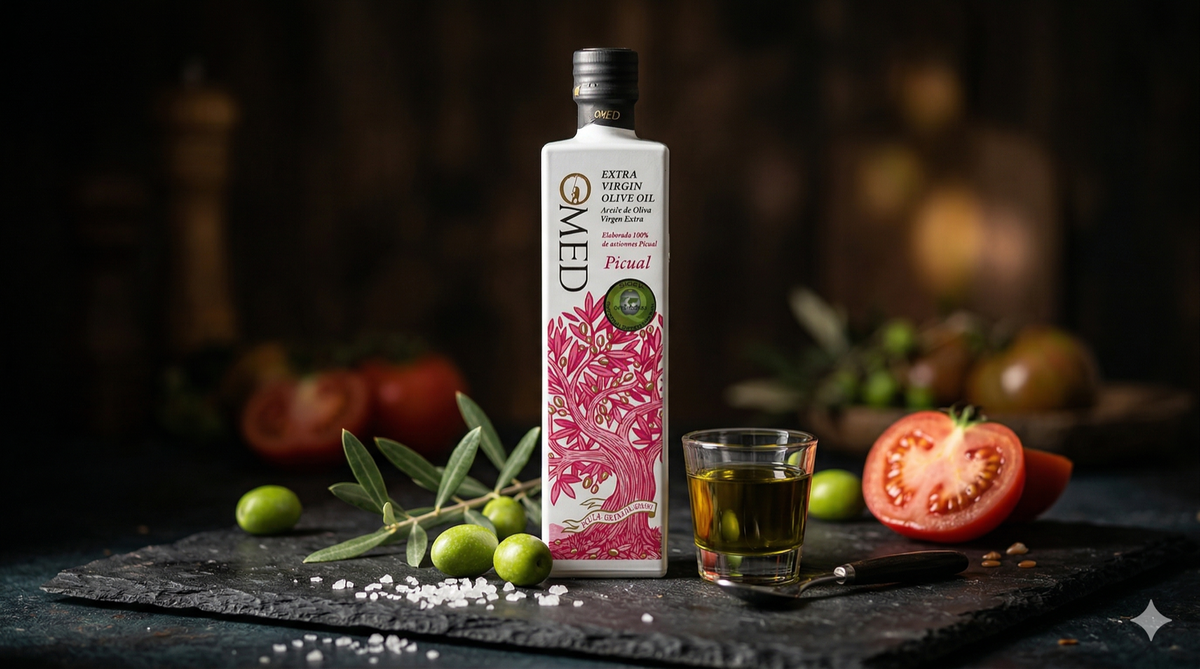
In Granada, for example, the García family behind O-MED has spent two decades making an early-harvest Picual in Ácula that has won the Premio Alimentos de España three times and was named number 1 in the world by Der Feinschmecker in 2021. In Sierra Nevada, Quaryat grows Picual at over 1,000 metres altitude, which gives it a distinct, more complex aromatic profile.
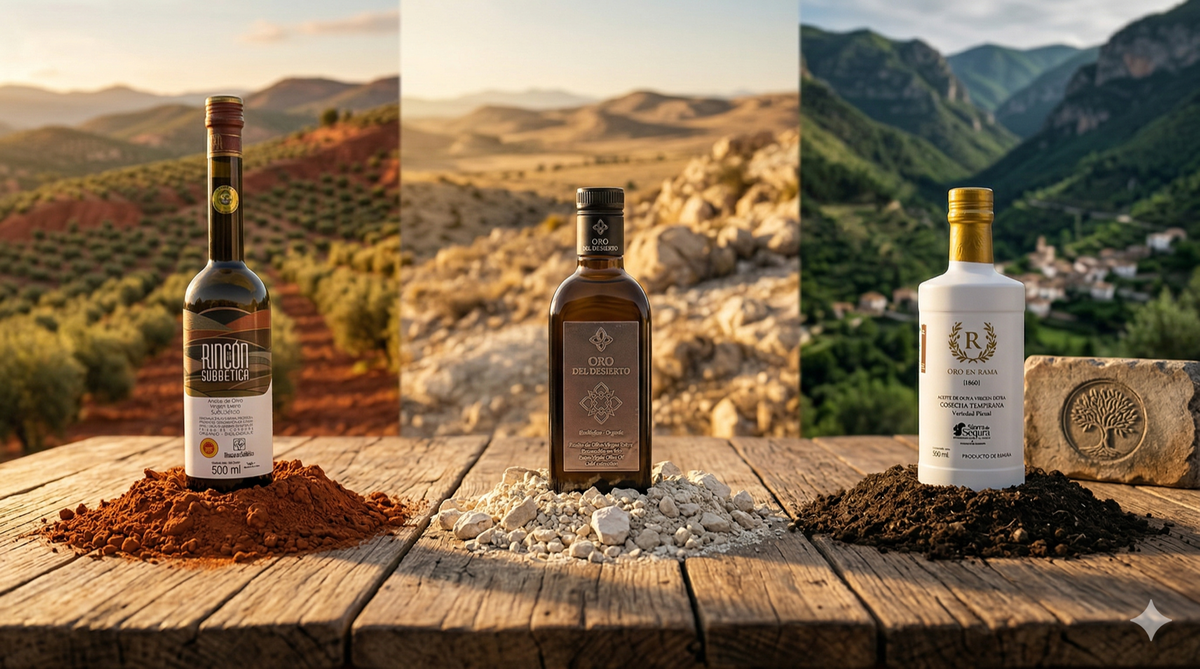
Terroir matters. The same Picual planted in lowland fields at 300 metres and in the mountains at 1,200 metres produces recognisably different oils.
How to Use It
Picual is the oil for the main course, not the appetiser:
- Red meats and stews — its bitterness balances the fat
- Pulses — a generous drizzle of Picual over a bowl of lentils is a game-changer
- Aged cheeses — manchego, pecorino, any cheese with character
- Grilled vegetables — peppers, aubergines, asparagus
- Dark chocolate — it sounds odd, but the bitter-on-bitter combination works surprisingly well
- Pan con tomate — the classic. This is where a good Picual shines like nowhere else
What If the Bitterness Does Not Convince Me?
Give it time. Your palate can be trained. If you come from neutral oils, start by pairing the Picual with bread, with food. Do not taste it neat on a spoon the first time around. Within two or three weeks your palate will have recalibrated and the oils you used before will taste like nothing.
Remember: bitterness and pungency are signs that the oil is alive, that it contains what your body needs. Do not run from them.