If it's Aceite de Jaén®, it carries the seal on the bottle.
The Regulatory Council of the Protected Geographical Indication verifies and labels each bottle so it meets the standards of Jaén oil. This autumn you can come and taste them, blind, at Molino & Cata.

Initiative funded by the Diputación de Jaén to promote the province's extra virgin olive oils.

A sea of olive trees spread across 97 municipalities.
89.75% of the province's cultivated land.
From Marmolejo to Noalejo, 750 m of elevation difference.
One in every five litres on the planet comes from here.
A single province produces more olive oil than any country in the world.
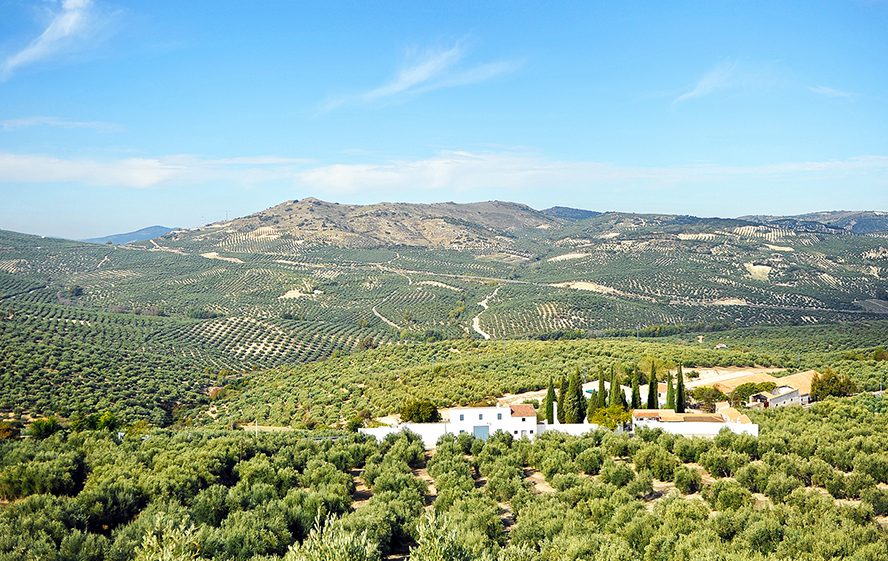
That province is Jaén.
The Phoenicians brought it around 1050 BC and Rome turned it into an industry: Baetica supplied oil to half the empire. Rome fell and the olive grove stayed.
Twenty centuries later it's still there, covering 89.75% of the province's cultivated land. It's not scenery: it's a living infrastructure of 66 million trees.
Jaén oil has been travelling the world for decades. For a long time it did so mostly in bulk: it left the province as a raw material and reached the end consumer without anyone knowing where it came from. A great oil, with the name left blank.
The PGI exists so that journey happens with the name attached. Every certified bottle that reaches Tokyo, New York or São Paulo tells who made it and where: origin stops being a fact lost in the chain and becomes what gives value. And that value returns to the province.
continents where Jaén oil is sold
main markets, drawn on the map
Spain is the world's leading exporter of olive oil
An oil born in one province and eaten at breakfast on five continents.
With the seal, origin travels with the bottleOne in every five litres of olive oil in the world comes from here.
Year after year, Jaén produces more oil than all of Italy.
Bitterness isn't a defect. It's the fingerprint of a summer without rain.
The PGI doesn't describe flavour with adjectives: it explains it. The rainfed olive tree in Jaén goes thirsty —summers of 35 ºC, barely 475 mm of rain a year, less than 10% of it in summer— and responds by concentrating polyphenols, tocopherols and oleic acid.
Those molecules are exactly the ones perceived in the mouth as bitterness and pungency, and the ones that make the oil keep. Character isn't an add-on: it's water stress turned into flavour.
Mountain and countryside olive grove, between 250 and 1,000 m, on limestone soils of pH 6 to 8.
Very dry summer, high sun exposure and relative humidity below 20%.
More polyphenols, more tocopherols and more oleic acid in the same fruit.
Marked sensory intensity and stability far above average.
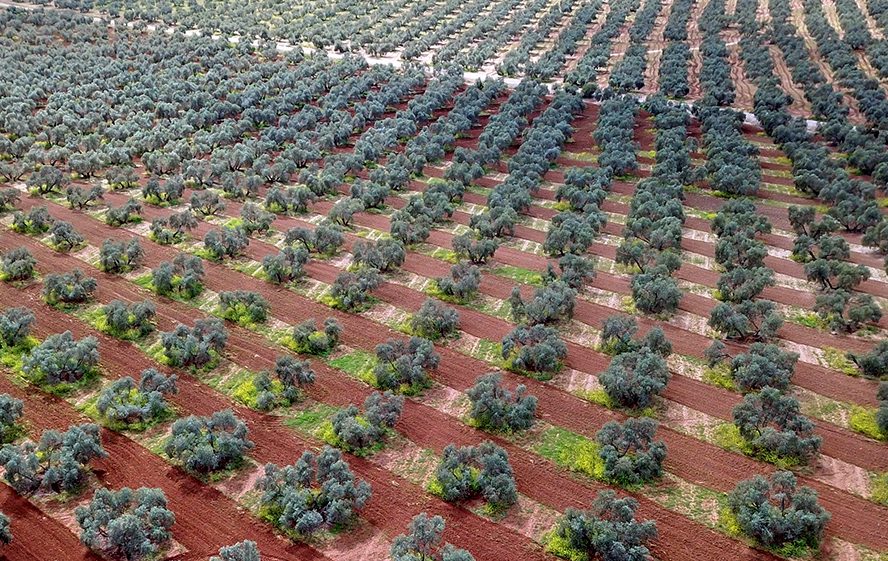
750 metres of elevation difference within the same designation. That's why two certified oils can be nothing alike.
When you buy with the seal, you buy extra virgin. No caveats.
The only real doubt in front of a shelf is that one: is this really extra virgin? The general standard allows an oil with up to 0.8% acidity to be called extra virgin. The seal requires 0.5% at most, a minimum of 300 mg/kg of polyphenols and a median defect equal to zero. Zero. It's not a brand promise: it's a threshold that someone measures.
The general standard allows up to 0.8% to be called extra virgin.
The antioxidants that give bitterness and preserve the oil.
The stable monounsaturated fat, the one that doesn't oxidise.
Not a single negative attribute perceptible to the tasting panel.
Every olive intake is recorded with supplier, delivery note, date, variety, weight and the cadastral references of the olive grove with its municipality.
The correlation between the olives coming in and the oil going out is documented, with quantities and date. For every tank you can know where it comes from.
Every unit eligible to carry the seal is identified with batch number, back-label series, date, quantity and destination.
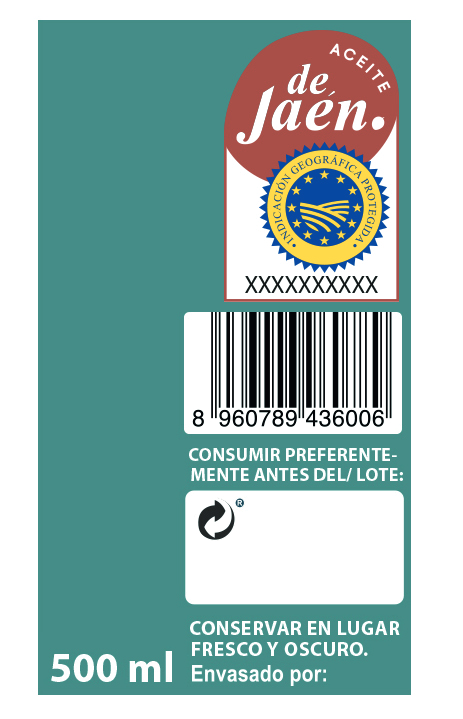
The "de Jaén" seal next to the European PGI symbol and a unique, non-reusable number issued by the Regulatory Council. Without this element, no "Jaén" mention on the label certifies anything.
The batch connects the bottle with the three traceability records: from this number you can trace all the way back to the olive grove.
The "Bottled by" statement identifies an entity registered with the Regulatory Council. Only they can use the back label.
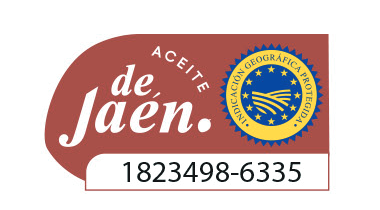
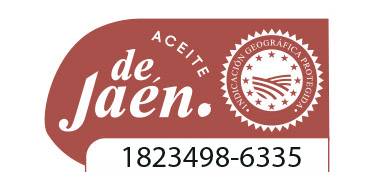
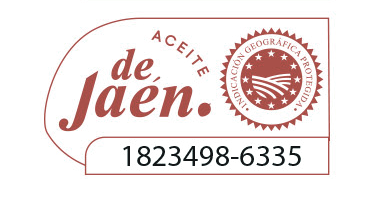
The labelling manual allows three graphic versions of the back label depending on the packaging, but all three share the only thing that matters: the unique number issued by the Regulatory Council. The finish changes; the number doesn't.
Almost everything tasted here is Picual. The interesting part is the almost.
The PGI recognises Picual as the main variety and admits six secondary ones, three of them native to the province. At least 85% of the oil must come from native varieties.
That margin is where the rare oils appear: Royal de Cazorla, Manzanilla de Jaén, Carrasqueño de Alcaudete. Varieties that in another province would already have been pulled up.
Healthy, fresh olive, with hints of vegetables, green leaf and prominent fruity notes. Marked bitterness and pungency: that's polyphenol, and it's what makes it one of the most stable oils in the world.
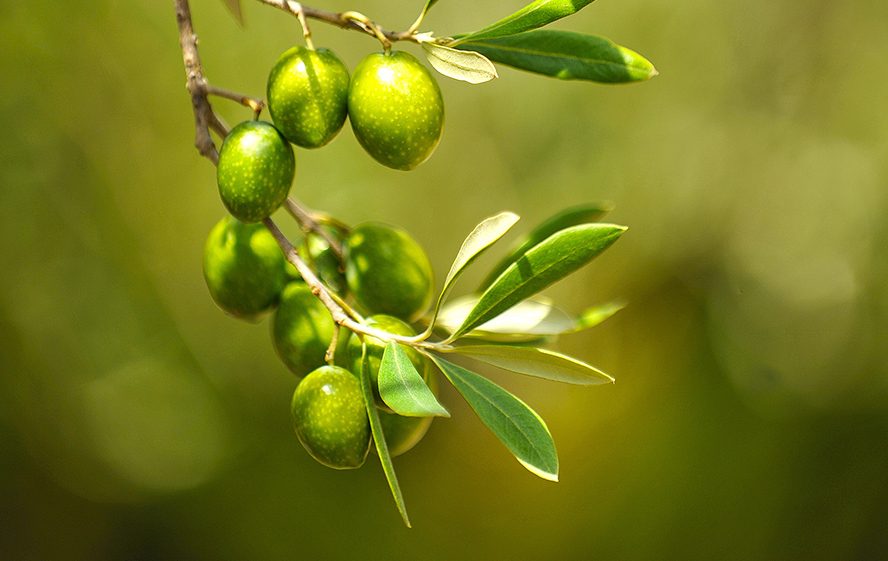
Secondary varieties admitted by the PGI. The standard doesn't set sensory descriptors by variety —only for the final oil—, so the profiles are the general ones for each variety.
Tasting isn't intuition. It's reading a spec sheet.
The official tasting panel scores each oil on a continuous scale from 0 to 10 and records the median of three attributes. For the bottle to carry the seal, each attribute has to fall within its band.
A PGI oil can't be flat. Nor can it have a single defect: the median defect must be exactly zero.
Aroma of healthy, fresh olive, with hints of vegetables, leaf and green grass. Below 3 there's no seal.
Neither flat nor aggressive: the official band excludes both the oil without character and the unbalanced one.
The throat pungency is polyphenol in action. It's measured, not debated.
Any negative attribute perceptible to the panel leaves the batch outside the PGI.
"Green" harvest. High fruitiness, bitterness and pungency at their highest point of the year.
End of the campaign, always before 31 December. A rounder, sweeter profile.
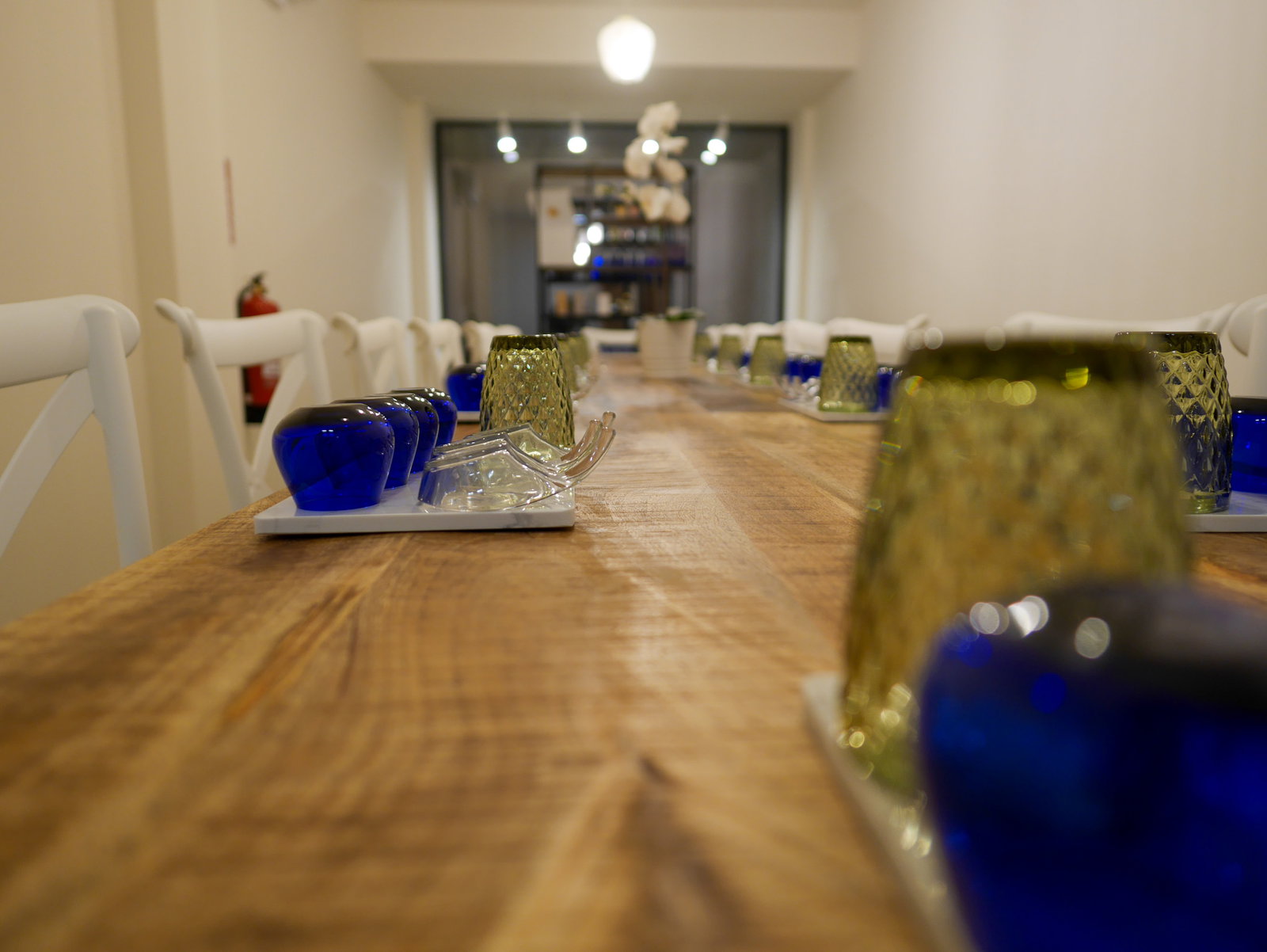
Discover up to six PGI oils. Blind. With the Molino & Cata guarantee.
Two ways to discover the oils that carry the seal: tastings in our olive oil shop (oleoteca) and professional tastings in the tasting room, led by Mercedes Uceda.
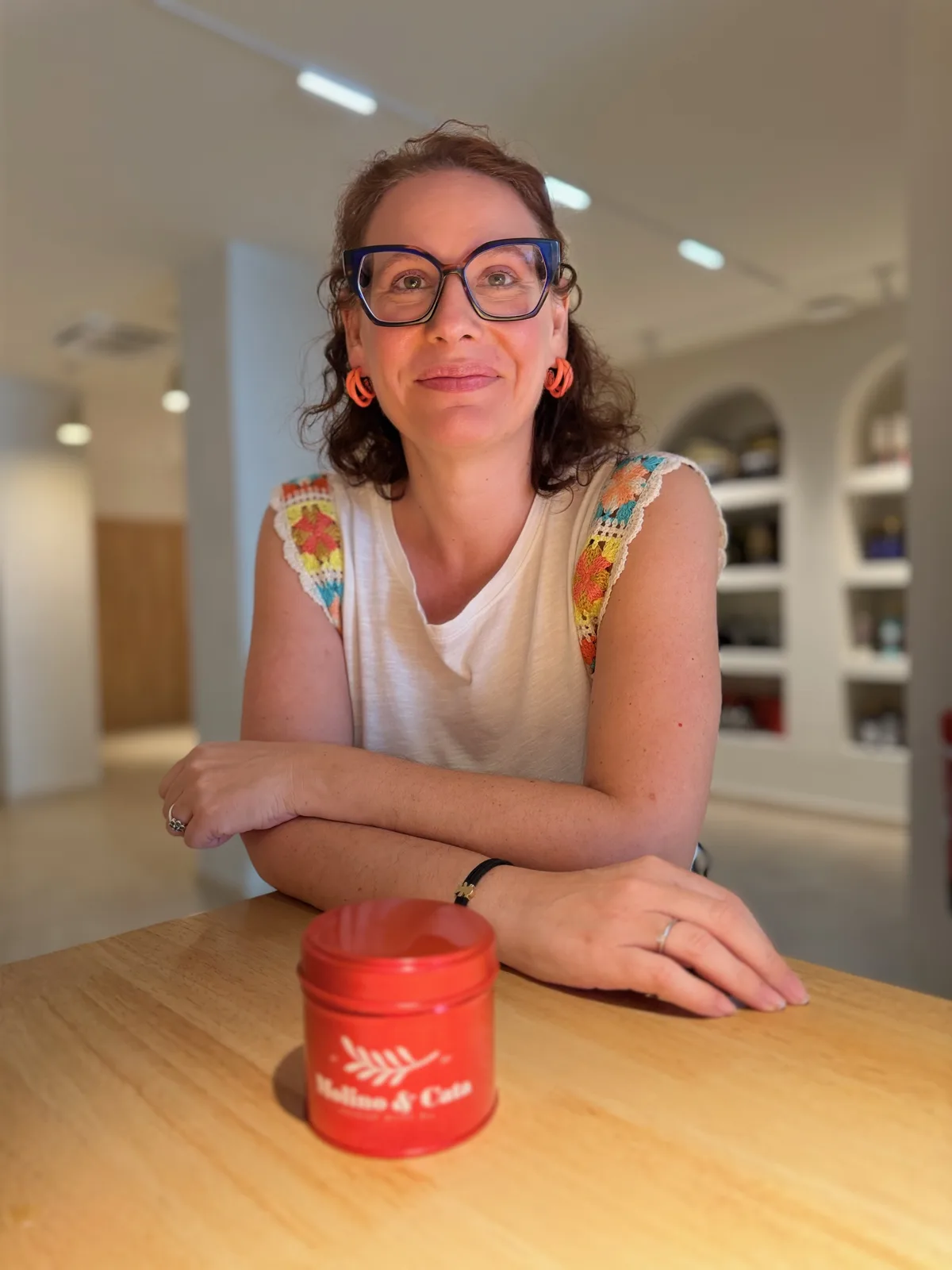
In the olive oil shop, during store hours. The campaign oils, guided at the counter.
In the tasting room, 90 minutes and up to 10 spots. Led by Mercedes Uceda.

Every bottle with the seal keeps a village on the map.
In Jaén the olive grove isn't just another crop: it's what keeps people rooted to the land. 76% of holdings don't reach five hectares —this isn't about large estates, it's about families.
When oil is sold in bulk and without identity, someone else sets the price. When it's sold certified and with a name, the value stays in the province. Buying with the seal is, literally, choosing who gets paid.
"Jaén" sells so well that some put it on the bottle without the right to.
The PGI's official dossier documents the name's reputation —and its misappropriation—. A review of the OEPM, EUIPO and OMPI registers finds the place name "Jaén" embedded in 68 distinctive signs. The regional government (Junta) has opened penalty proceedings against bottlers for improperly including it on labelling.
That's why a seal exists. Not to decorate the bottle: so the name keeps meaning something.
In the OEPM, EUIPO and OMPI records, despite the limitations of EU legislation on geographical trademarks.
National telephone survey by the Observatorio Permanente del Aceite de Oliva, 2009.
2002 study in five provincial capitals: fifth in Spain and first in Andalusia, when the PGI didn't yet exist.
The ones that can actually carry it.
Entities registered with the Regulatory Council of PGI Aceite de Jaén, with a numbered back label on every bottle. The list keeps growing.
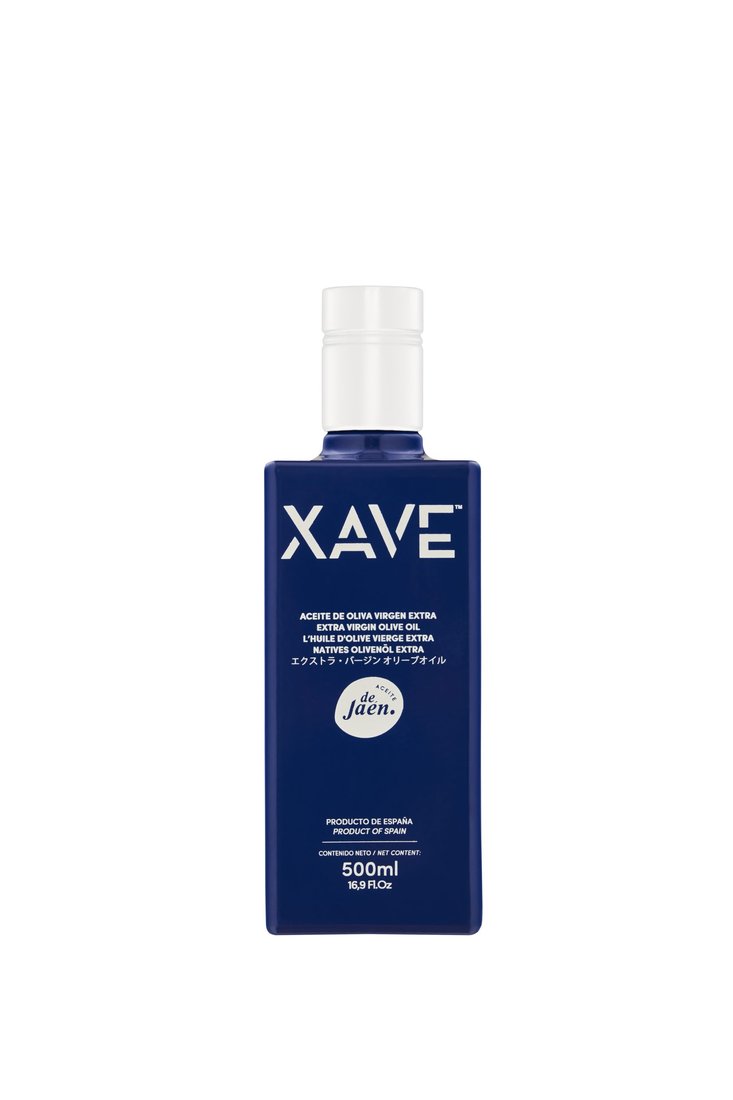
The oil from the capital's cooperative: 400,000 olive trees around the city of Jaén.
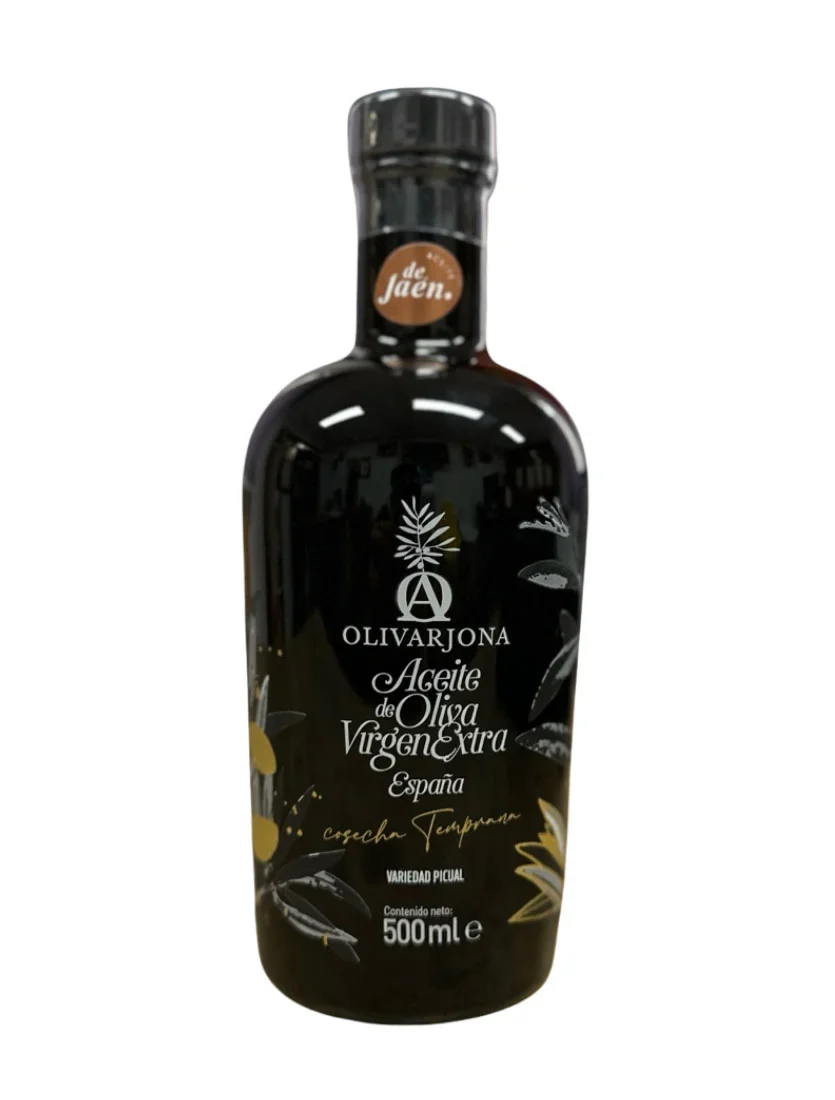
Early harvest from the northern countryside, from the San Fernando cooperative.
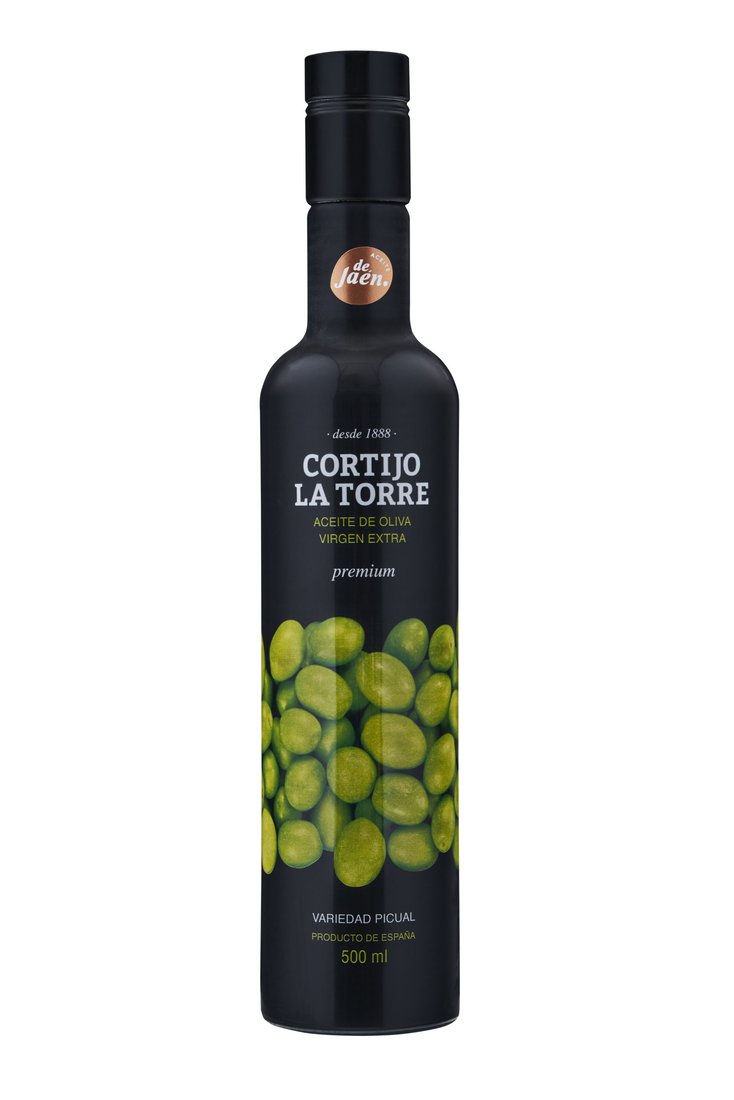
Family oil mill at the foot of Sierra Morena, awarded worldwide.
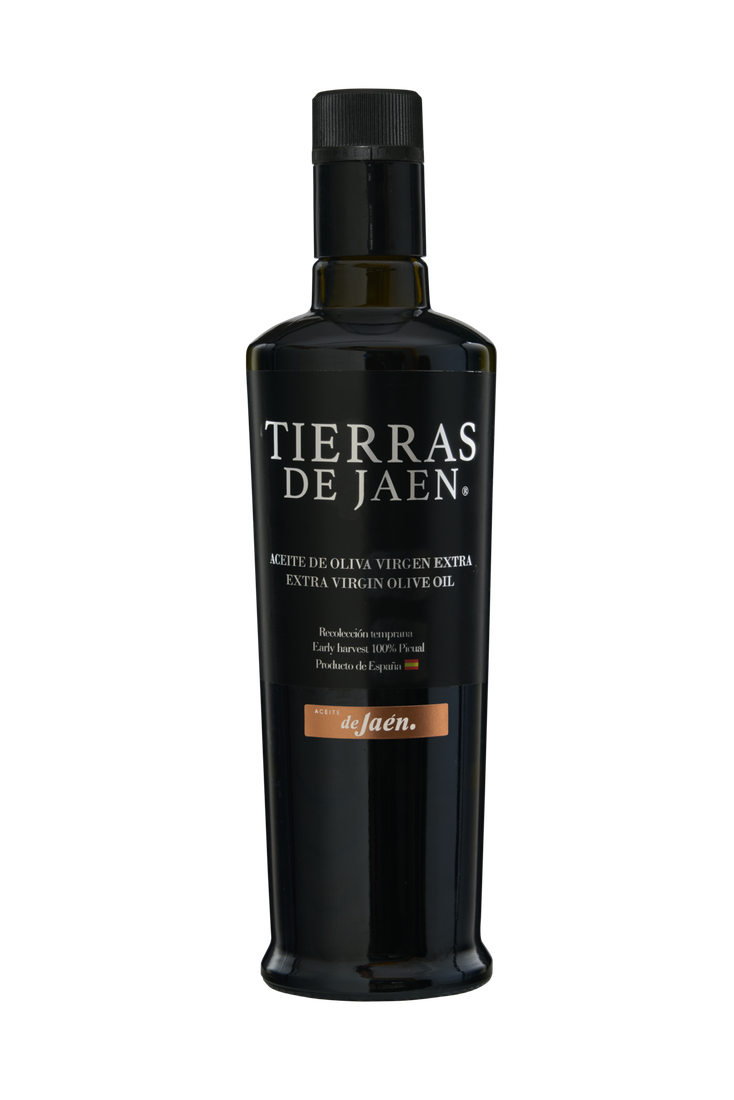
Premium harvested in October, stored in stainless steel under nitrogen.
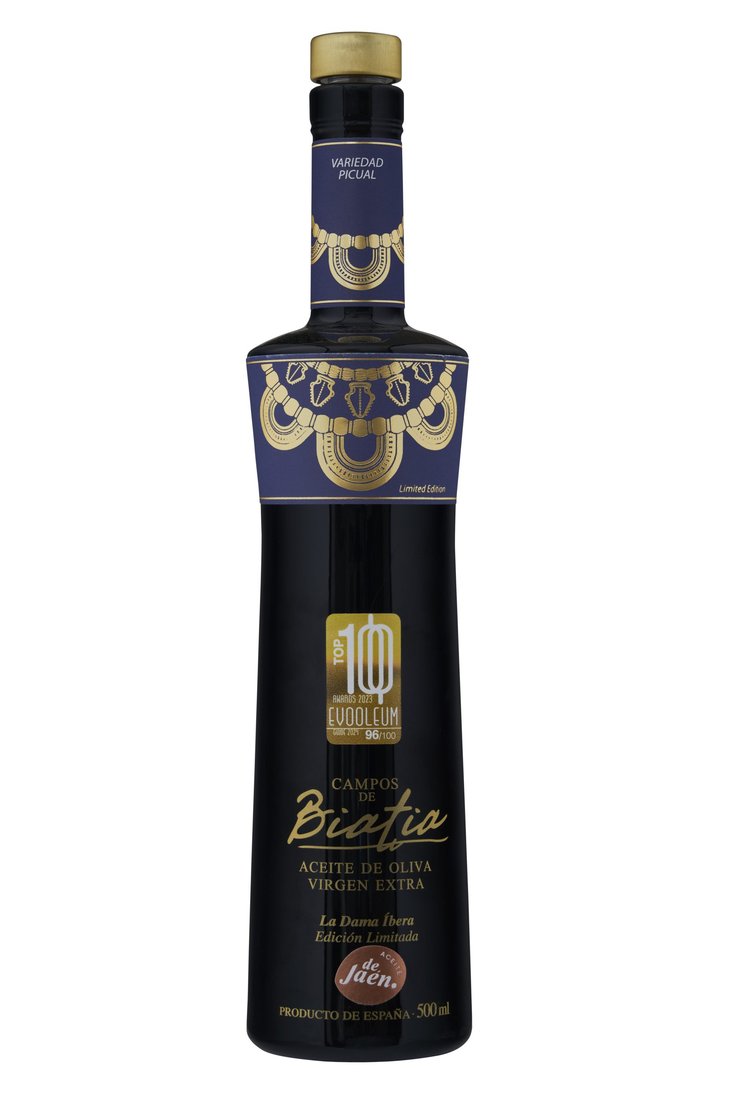
La Dama Íbera, the flagship Picual of the Baeza olive-oil cooperative.
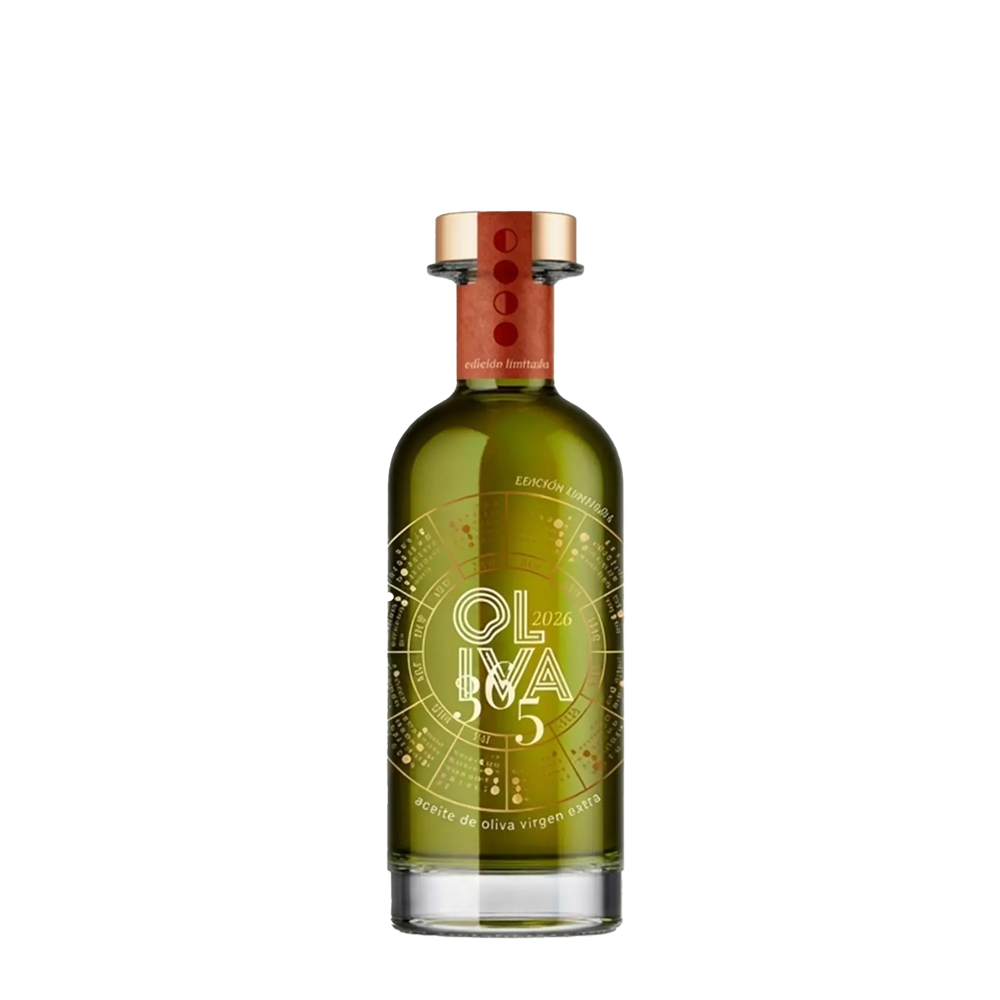
Limited edition with the campaign calendar screen-printed on the bottle.
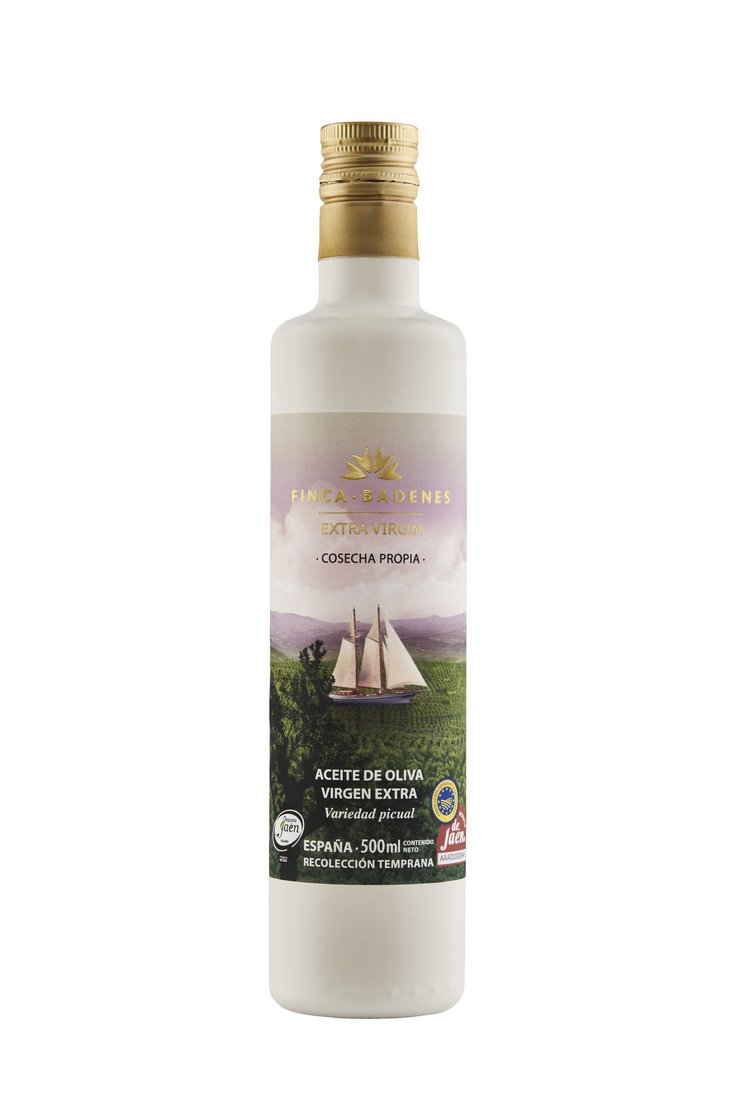
Own harvest in the Guadalquivir floodplain, beside the sea of olive trees of Jabalquinto.
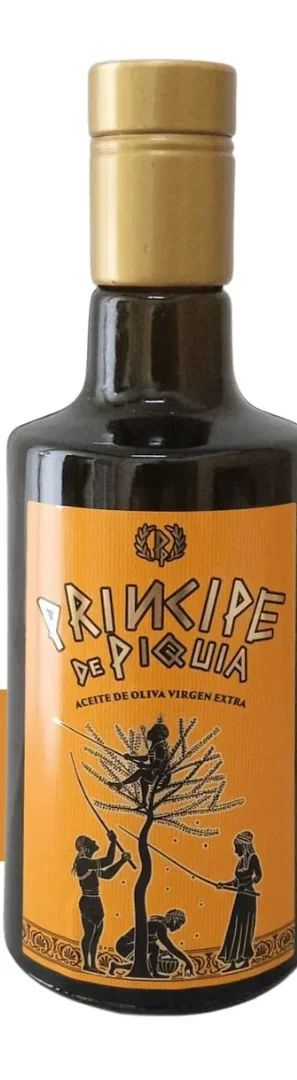
Iberian-inspired label for the countryside Picual.
What is PGI Aceite de Jaén?
A Protected Geographical Indication: a quality designation recognised by the European Union that protects the extra virgin olive oils produced in the province of Jaén, its 97 municipalities. It was the first extra virgin olive oil PGI recognised in Spain.
One feature sets it apart from every other olive oil quality designation: all the fruit is picked from the tree before 31 December. That end-of-campaign cut-off was decisive in unblocking its recognition in Europe.
It is managed by a Regulatory Council in which oil mills, bottlers and marketers register, and which controls and issues the numbered back labels. The body that verifies that each bottle meets the seal's conditions before going to market is the Directorate-General for Industry, Innovation and the Agri-Food Chain of the Junta de Andalucía.
Two layers: the body that governs the sector and the body that audits the one that governs. Its function isn't decorative: it's the mechanism the sector uses to defend itself from fraud and the one that lets consumers trust without being experts.
Committed to the land and to those who work it.
Intense and recognisable, shaped by the Picual variety.
Distinctive quality with a guarantee of origin.
Yes. The PGI only protects extra virgin, and with stricter thresholds than the general standard: maximum acidity of 0.5% versus the legal 0.8%, a minimum of 300 mg/kg of polyphenols and a median defect equal to zero on the tasting panel. If a batch doesn't reach the category, it isn't certified.
PGI Aceite de Jaén rests on the prestige of the name. The general rule for a Protected Geographical Indication only requires one of the stages —production, processing or transformation— to happen within the territory; Jaén goes much further: the olives come exclusively from the province and the oil is milled only in Jaén oil mills. Bottling is the only stage that may happen elsewhere, because where the oil is bottled adds nothing to the product. In a Protected Designation of Origin, by contrast, every process must take place within its territory. Jaén also has three PDOs: Sierra de Cazorla, Sierra de Segura and Sierra Mágina.
Look at the back label: the labelling manual requires the signage to go there. You'll see the "de Jaén" logo next to the European PGI symbol and, below it, a unique, non-reusable number issued by the Regulatory Council. The back label can be full colour, monochrome or line art depending on the packaging, but the number is always there. No other "Jaén" mention on the label certifies anything.
Two levels. The Regulatory Council manages the PGI, registers the operators and controls and issues the back labels. Verification of compliance with the product specification before marketing falls to the Directorate-General for Industry, Innovation and the Agri-Food Chain of the Junta de Andalucía. Operators must keep three auditable records: receipt, production and dispatch.
Not necessarily. In fact, there are sealed oils that cost less than brands promoting themselves as "from Jaén" without any traceability at all. The difference isn't in the price: it's in what's behind it. The seal guarantees olives picked from the tree, milling in under 36 hours, lab analyses and a tasting panel — things a pretty label doesn't certify.
That's exactly what it's for. The tasting is blind in a cobalt glass, guided, and starts from scratch: learning to smell, to tell an early oil from a ripe one and to read bitterness and pungency as measurable virtues.