

Home
>
Articles about Extra Virgin Olive Oil
>
From Geese to Horses: Animal Handling in Organic Extra Virgin Olive Oil Production
From Geese to Horses: Animal Handling in Organic Extra Virgin Olive Oil Production
Summary: Two Spanish producers of organic extra virgin olive oil are demonstrating that sustainability goes far beyond a green label. Pago de Peñarrubia has integrated geese into its olive groves for weed control and soil improvement, while Oro del Desierto uses horses (and managed grazing) to maintain ground cover and close nutrient cycles. In this article, we explain what they do, why it works, and how it has a measurable and positive impact on the soil, biodiversity, and climate.
Why organic production matters (and how it shows in the soil)
Organic olive production prohibits synthetic pesticides and fertilizers, promotes healthy soil (more organic matter, beneficial microbes, earthworms), encourages cover crops , and implements practices that reduce erosion, sequester carbon, and increase biodiversity. All of this results in olive groves that are more resilient to droughts and torrential rains, and oils with greater aromatic complexity.
In Spain, initiatives like Olivares Vivos have demonstrated that it is possible and profitable to increase biodiversity without sacrificing productivity. At the same time, the Andalusian government itself has been promoting the benefits of cover crops in olive groves for years: reduced soil and water loss, less runoff, and improved infiltration.
Pago de Peñarrubia: geese for grazing, weed control and biodiversity
Location: Hellín (Albacete). Certification: Organic throughout the farm. Organic data sheet .
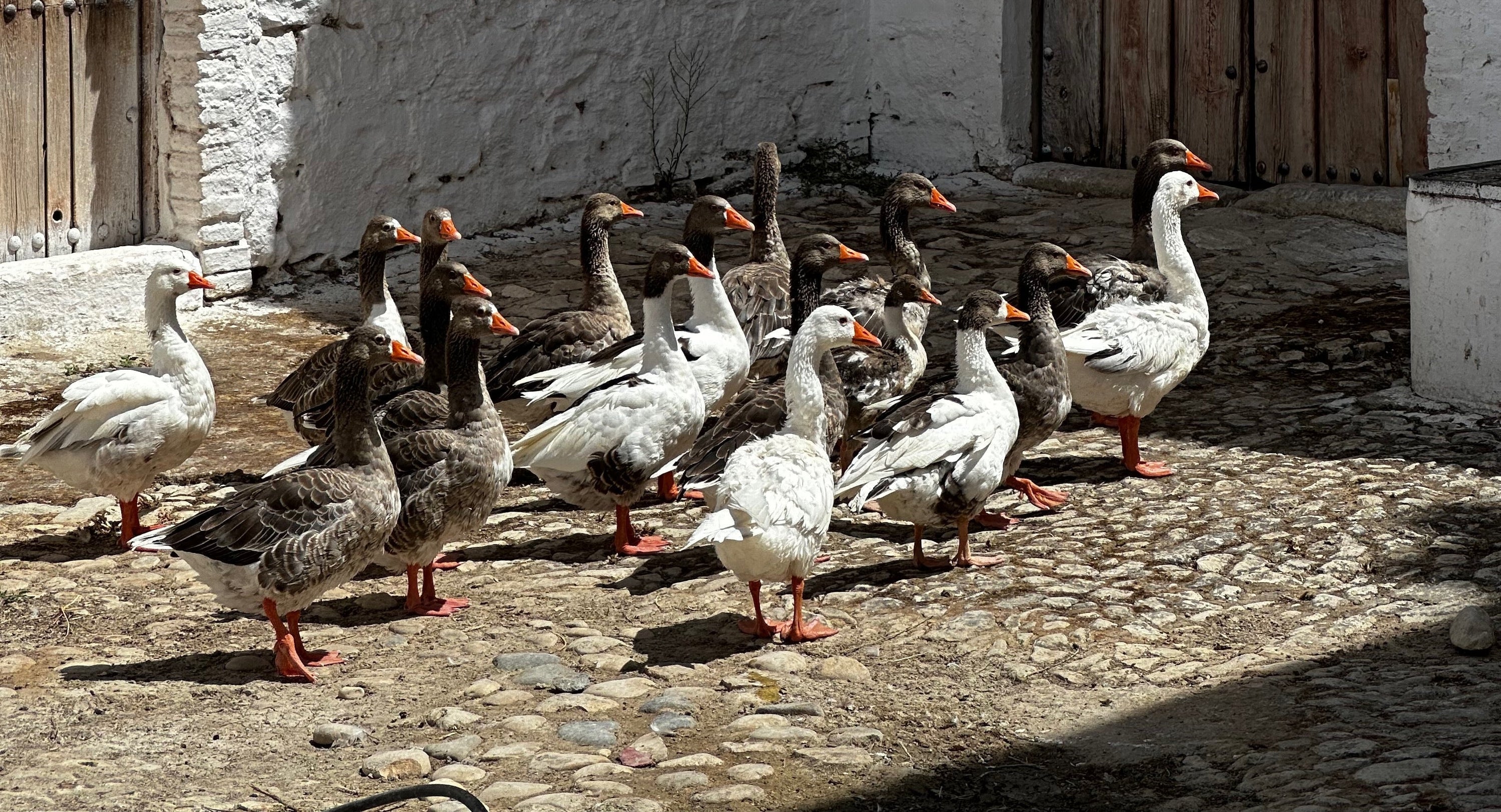
Integrating geese into olive groves is not a quaint anecdote: it's a smart agronomic strategy. According to Olive Oil Times , Pago de Peñarrubia selected the Empordà Goose (an endangered Spanish breed) for its weed and biodiversity management, combining biological control with the conservation of avian genetic heritage. See: “Award-Winning Olive Oil Producer Thinks Weed Control Is for the Birds” .
How the system works with geese:
- Weed control by grazing: partially replaces mechanical clearing and herbicides (prohibited in organic farming), saving fuel and emissions.
- Natural fertilization : goose droppings add nitrogen and carbon to the surface horizon of the soil, feeding beneficial bacteria and fungi.
- Stimulation of soil life : more live roots and organic matter = more porosity, better infiltration and less runoff .
- Functional biodiversity : by maintaining a living cover and reducing mechanical intervention, habitats for insects, birds and micromammals are improved.
Furthermore, Pago de Peñarrubia's quality strategy completes the cycle: careful harvesting without the fruit touching the ground and milling in less than 3 hours from the tree, which reduces oxidation and preserves aromas. Details on their website: “Organic Olive Oil” and homepage .
Where to buy: At Molino y Cata,Pago de Peñarrubia Picual .
Desert Gold: Horses and Regenerative Management in Taverns
Where: Tabernas (Almería). Certification: organic for decades. AEMO Award for the most sustainable olive grove in Spain (2023) .
The Oro del Desierto team integrates horse (and occasionally sheep) grazing to manage the vegetation between the rows of the olive groves. This practice, in addition to reducing mechanical mowing, closes nutrient cycles and provides organic matter in a distributed manner. References: producer profile (mentioning horses and sheep at different times of the year) and our own publications (videos and posts) showing horses grazing under the olive trees and grazing in the olive grove .
What does working with horses offer?
- Fewer emissions (less use of mowing machinery) and less soil compaction .
- Fertility distribution at the base of the tree and in streets through excrement, improving organic C and CEC (cation exchange capacity).
- Improved infiltration and resilience to intense rainfall events (key in semi-arid climates like Tabernas).
This is all complemented by composting (using olive pomace, pruning waste, and mulch), terracing, and infiltration drainage systems that prevent erosion. Oro del Desierto explains its approach on its blog and in its news articles (e.g., AEMO award and history and philosophy ).
Where to buy: At Molino y Cata, Desert Gold collection .
What science (and experience) in olive groves says about cover crops and grazing
Agronomic evidence from Mediterranean olive groves supports these practices. The Andalusian Regional Government compiled field results showing that cover crops reduce soil and water loss in most cases and, except for isolated instances of compaction, improve infiltration and decrease runoff. This is further supported by the Living Olive Groves approach, which provides metrics on biodiversity and overall profitability.
In summary: more live roots + well-managed grazing + composting = more porous and fertile soils, more water available for the olive trees, less erosion and, in the long run, more expressive oils .
Benefits compared: geese vs. horses (and points in common)
| Aspect | Peñarrubia Payment (Ocas) | Desert Gold (Horses) | Ecosystem outcome |
|---|---|---|---|
| Weed control | Selective grazing, less mowing and zero herbicides | Reduction in mechanical mowing and fuel | Fewer emissions and more protective soil cover |
| Soil fertility | Contribution of N and C via distributed excretions | Organic feed and improved CIC | More organic matter and microbial life |
| Compaction/Infiltration | Low mechanical impact; good infiltration | Moderate trampling in front of heavy machinery | Less runoff , more usable water for the olive tree |
| Biodiversity | Use of local breed (Empordanese Goose) and stable habitats | Varied plant structure + beneficial fauna | Greater species richness and ecosystem services |
Impact on oil: quality, consistency and narrative
When the soil "breathes," the olive tree feels it. Active cover crops, organic nutrients, and less stress promote more defined fruitiness , balanced bitterness and spiciness , and—in general —cleaner sensory profiles . At the brand level, these practices also create an honest narrative : consumers in the US, Japan, and Korea increasingly value organic, regenerative, and traceable products.
- Learn more about the philosophy and awards of Pago de Peñarrubia: official website and its ecological approach .
- In Oro del Desierto, his AEMO award and his story synthesize a long decade of regenerative work.
How to support these practices (and try their EVOO)
Your purchase is a vote: by choosing organic extra virgin olive oil from projects that regenerate soils, you are funding real ecosystem services (less erosion, more biodiversity, more carbon in the soil). Start by tasting two examples that represent this model:
- Pago de Peñarrubia Picual — Jaén/Albacete, organic, green fruity with great cleanliness.
- Desert Gold (collection) — Taverns, ecological, expressive and consistent profiles campaign after campaign.
Conclusion
From geese to horses , well-designed animal management demonstrates that sustainability is not just marketing, but rather applied agronomy with sound judgment. Pago de Peñarrubia and Oro del Desierto offer a replicable roadmap for Mediterranean olive groves: living cover crops, planned grazing, composting, and smart water management . The result is both visible and tangible: healthier soils, more vibrant landscapes, and oils that tell—in every glass—a compelling story of land and future .
Share