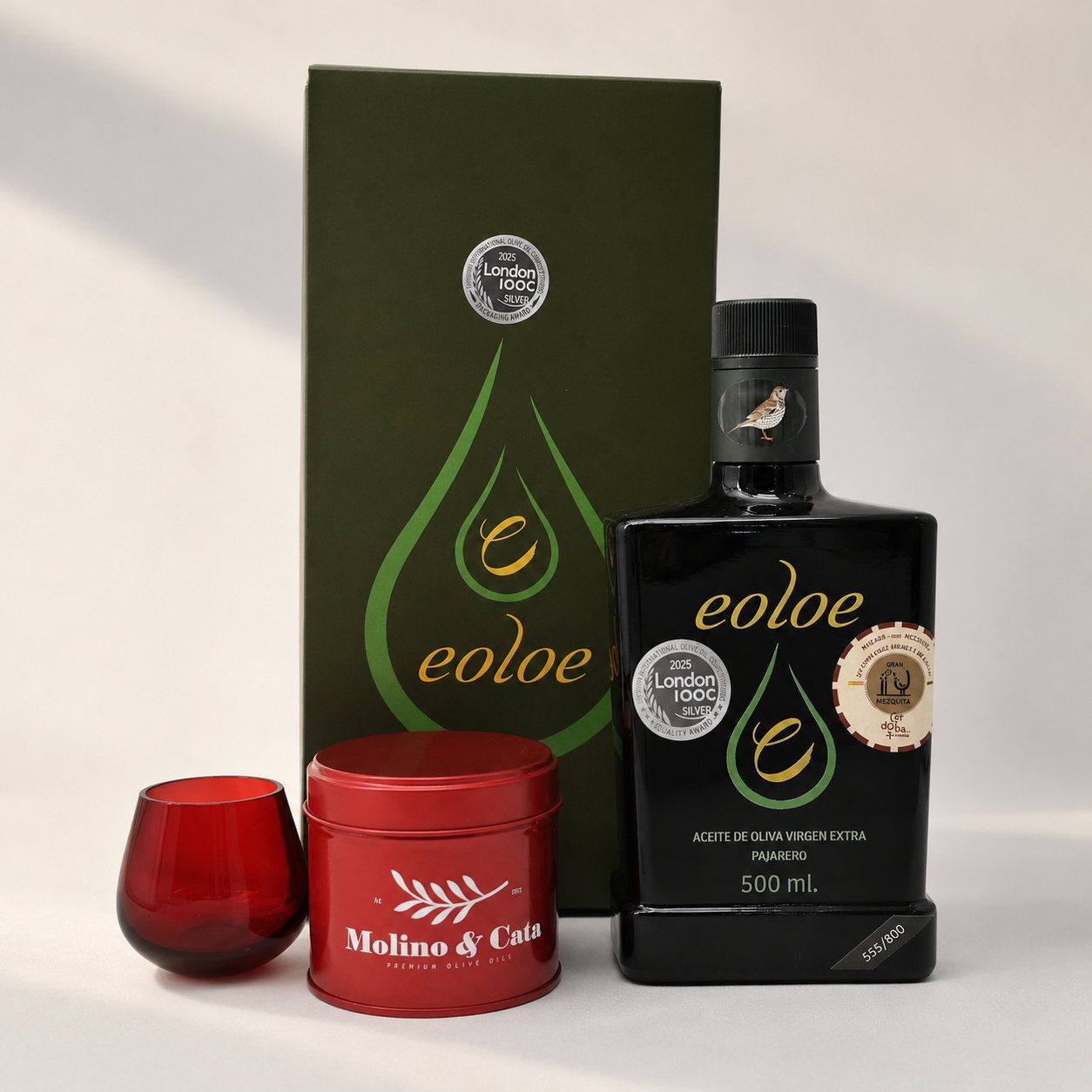
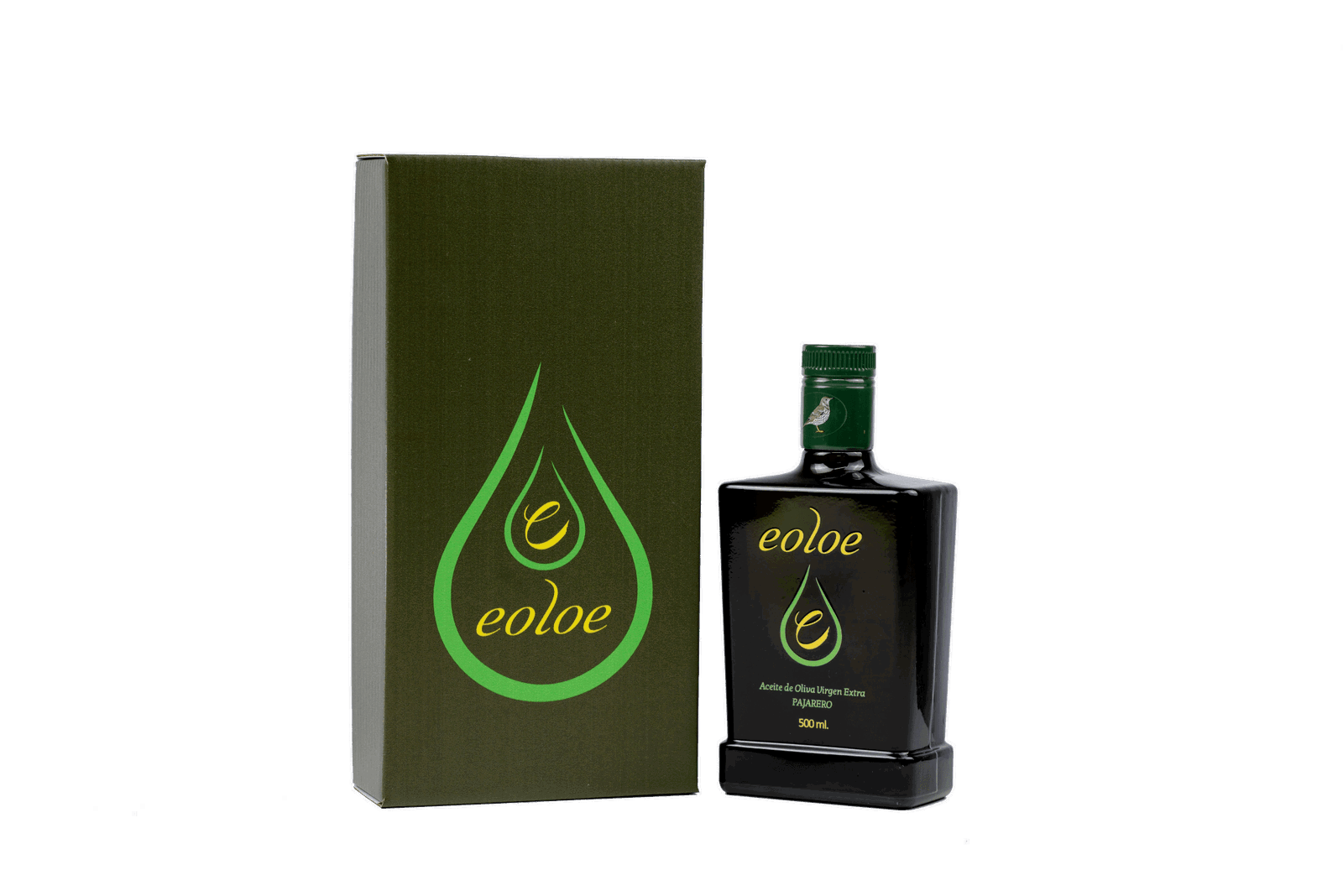
eoloe Pajarero
This Pajarera presents an intense aroma of green leaf and fennel, with notes of red berries and spices. On the palate it enters gently, then...
Product reviews
Taste it blind.
Like the panel.
Cobalt glass hides the colour so nose and palate lead. Every bottle ships with its lab numbers and its story.
Tasted blind, with professional method
Profiled 0–10 using the cobalt catavino — colour hidden, so nose and palate lead.
Sensory profile
Tasted by Mercedes Uceda
Aromatic intensities evaluated in a professional tasting. Exact values are part of the sensory consultancy service.
Meet your oil
From a single grove to a sealed cobalt bottle — every step, dated and measured.
This oil, in full
Everything behind the numbers — the varietal, the estate, the milling, and how to taste it.
Pajarera is a variety that 99% of olive oil consumers have never heard of. It grows in the Sierras Subbeticas, the Guadajoz Valley, and the Campina Sur of Cordoba. Its name comes from the fieldfares — birds that prefer these olives for their large size, their sweetness when ripe, and their high energy value. If the birds choose it, there must be a reason.
The Matilla Rubio-Chavarri family has managed the "Minguillao" estate in Priego de Cordoba for five generations. In 2018 they launched a pioneering project by planting Pajarera olive trees, and began marketing the single-variety under the eoloe brand in 2021. It is a personal and bold bet: working with a little-known variety when everyone else plays it safe with Picual or Arbequina.
Pajarera has a very limited cultivated area, concentrated in the province of Cordoba. The industry has focused on mass-market varieties and ignored it for decades. Producers like eoloe are recovering it for the gourmet market. An oil for EVOO explorers — if you already know Picual, Arbequina, and Hojiblanca, Pajarera is your next discovery.
Pajarera is a variety that 99% of olive oil consumers have never heard of. Fieldfares prefer it for its sweetness when ripe, and that already tells us something. This single-variety from the Matilla family has an unmistakable intense green leaf and fennel character with red berries — on the palate the transition from gentle to bitter and then to a chili-like pungency is one that leaves a lasting impression. It is the oil that allows me to talk about forgotten varieties that deserve to be rescued.